Buying your first home is exciting, but it can also feel like a lot. There are new words, big numbers, and tight deadlines. A clear home buying checklist helps you stay calm and in control.
In the US, a typical home purchase takes about 30-60 days from the moment your offer is accepted until you get the keys. During that time, you’ll deal with loans, inspections, appraisals, and a big stack of paperwork. (Source: Zillow )
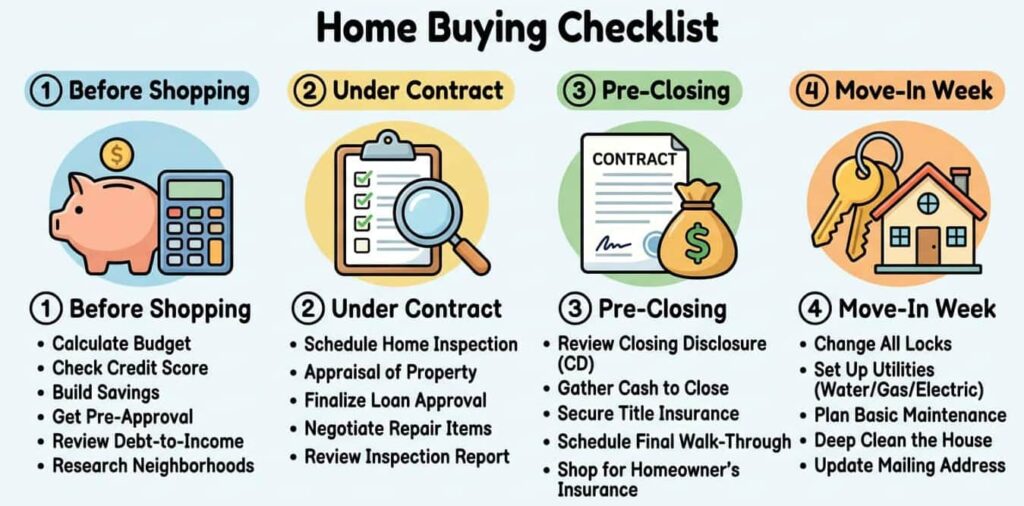
This guide breaks everything into 21 simple steps, grouped by stage:
- Before you start shopping
- When you’re under contract
- Just before closing
- Move‑in week
You can treat this as your working home buying checklist and turn it into a printable one‑pager for your fridge or planner.
Stage 1: Before you start shopping
These steps set you up for success before you ever walk into an open house.
1. Set your budget and target monthly payment
Do this before you look at listings.
- Decide what monthly payment feels safe, not just what the bank might approve.
- Include mortgage, property taxes, homeowners insurance, HOA dues, and an estimate for maintenance.
Ever wondered how much house you can afford?
2. Check your credit and fix quick issues
Your credit score affects your rate and approval.
- Pull your credit report and look for late payments, errors, or high card balances.
- Dispute mistakes and pay down high‑interest debt where you can.
A small score jump can save you money over the life of the loan.
3. Build a starter emergency fund
Owning a home means surprise costs.
- Aim for at least 3 months of expenses in a simple savings account.
- This cushion helps you handle repairs, job changes, or medical bills without panic.
4. Save for your down payment and closing costs
You don’t always need 20 percent down, but you do need some cash.
- Many first‑time buyers put 3–5 percent down, plus closing costs.
- Closing costs often run roughly 2–6 percent of the loan amount.
Create a clear savings goal and automate transfers each month.
Suggested read: 10 Proven Ways to Lower Your Closing Costs (Save $3,000+ on Your Home Purchase)
5. Estimate your true “all‑in” cost
- Look beyond the listing price.
- Check sample property tax amounts in your target areas.
- Get ballpark insurance quotes (you can do this online).
- Watch for HOA or condo fees and what they cover.
This will make your home buying checklist more realistic.
6. Pick your buying timeframe
Decide when you want to move and work backward.
- If your lease ends in October, you might want to close in September.
- Remember that closing alone can take about 30–60 days once your offer is accepted.
This helps you plan savings and avoid paying rent and a mortgage at the same time.
7. Research neighborhoods
Your house is only half the story. The area matters just as much.
- Look at commute times, schools (even if you don’t have kids), parks, and grocery options.
- Visit at different times of day to check noise, traffic, and parking.
Make a short list of two to four neighborhoods that match your lifestyle.
8. Get pre‑approved and gather documents
Pre‑approval turns you from “browser” into a serious buyer.
- Talk to 2–3 lenders and compare rates, fees, and service.
- Gather pay stubs, W‑2s, bank statements, and ID so you can move quickly.
Also read: How to Buy a House in the US in 2026 (step‑by‑step guide)
Stage 2: Once you’re under contract
You’ve found a home and your offer is accepted. Great. Now the clock starts.
9. Schedule your home inspection right away
An inspection checks the home’s condition.
- Book a licensed inspector as soon as you go under contract.
- Ask about structure, roof, HVAC, plumbing, electrical, and major safety issues.
You usually pay for this, but it can save you thousands later.
10. Read the inspection report and decide your move
Don’t just skim the report.
- Highlight safety issues and expensive repairs.
- Decide whether to: accept as‑is, ask for repairs, or request a credit at closing.
Work with your agent to respond before your inspection deadline.
11. Let the lender order the appraisal
The appraisal tells the lender what the home is worth.
- If the appraisal comes in at or above contract price, you’re good.
- If it comes in low, you may need to renegotiate price, bring extra cash, or challenge the report.
Your lender manages the process, but you should understand the result.
Don’t Miss: 7 Genius Ways to Save Money on Mortgage in 2026 (Without Refinancing!)
12. Shop for homeowners’ insurance
Your lender will require proof of insurance before closing.
- Get quotes from at least two or three companies.
- Compare coverage levels and deductibles, not just the monthly cost.
This is also a good time to ask about flood or earthquake coverage if needed in your area.
13. Track your deadlines and contingencies
Missing a date can risk your earnest money or your deal.
- Put key dates on a calendar: inspection, appraisal, loan approval, closing.
- Keep emails from your agent, lender, and title company in one folder.
Staying organized is a quiet superpower in the home buying checklist.
14. Stay “boring” with your finances
Underwriting is where the lender double‑checks everything.
- Don’t open new credit cards or finance a car.
- Don’t switch jobs or move big sums of money between accounts without explaining why.
Any major change can slow or even stop your loan approval.
Also read: What Is a Mortgage? Complete Beginner’s Guide for First-Time Buyers in the USA
Stage 3: Pre‑closing (last 1–2 weeks)
You’re close now. These steps help you finish strong.
15. Review your Closing Disclosure carefully
Your lender must send this at least three business days before closing.
- Check interest rate, loan type, and monthly payment.
- Confirm closing costs, taxes, and cash needed to close.
Compare it with your earlier Loan Estimate and ask questions if anything looks off.
16. Finalize your cash to close
You must bring the right amount in the right form.
- Arrange a wire transfer or cashier’s check (personal checks are usually not allowed).
- Double‑check wiring instructions with your title/closing company by phone to avoid scams.
Add this as a clear line in your home buying checklist so you don’t scramble at the last minute.
17. Confirm title work and owner’s title insurance
The title company checks that the seller really owns the property and that there are no unpaid liens.
- Ask your closing agent to confirm that title is clear.
- Strongly consider owner’s title insurance; it can protect you against hidden title problems.
This is one of those quiet details that matters a lot if something goes wrong.
18. Do a final walk‑through
Your final chance to see the home before money changes hands.
- Make sure agreed‑upon repairs are done.
- Check that appliances and items that should stay are still there.
- Look for new damage or leaks after move‑out.
Bring your offer and inspection notes so you know what to check.
19. Set up utilities and basic services
You want lights and water on when you move in.
- Arrange start dates for electricity, gas, water, trash, and internet.
- Ask the seller or agent for typical monthly utility costs so you can plan your budget.
Add account numbers and dates to your personal home buying checklist.
Stage 4: Move‑in week
You’ve closed. Now it’s about safety and smart habits.
20. Change locks and secure the home
You don’t know who still has keys.
- Change door locks or have them re‑keyed.
- Check and replace smoke and carbon‑monoxide detector batteries.
If your budget allows, consider a simple smart lock or alarm system.
21. Create a simple maintenance and “new home” plan
Good habits protect your investment.
- Make a one‑page list of monthly, seasonal, and yearly tasks (filters, gutters, HVAC tune‑ups).
- Note any “watch items” from your inspection report so you can plan for future repairs.
Your first home isn’t just a purchase, it’s the start of a new chapter, this home buying checklist is your map from ‘just dreaming’ to holding the keys in your hand.
Keep it close, ask questions often, and remember: careful preparation today builds long‑term peace of mind tomorrow.
Also read: 15 Urgent Tips on How to Save Money on Mortgage Fast in 2026
FAQs
1. What should be at the top of my home buying checklist?
Start with your budget and credit. Decide on a comfortable monthly payment, check your credit report, and build a basic emergency fund. This will guide every other choice you make.
2. When should I get pre‑approved in the home buying process?
Get pre‑approved before you start serious house hunting. It tells you how much a lender is willing to lend and shows sellers you’re a strong, prepared buyer.
3. Do I need a separate home buying checklist for each house I visit?
You can use one core checklist for the whole process, then add a simple “house‑hunting sheet” for each property. Note things like condition, layout, noise, parking, and gut feeling so you can compare later.
4. How many inspections should be on my home buying checklist?
At minimum, plan for a general home inspection. In some areas, you might add termite, sewer, radon, or septic inspections. Your agent can suggest what’s common in your area.
5. What happens if I miss a deadline on my home buying checklist?
Missing key dates, like inspection or financing deadlines, can risk your earnest money or even your contract. That’s why it’s smart to write all dates down, set reminders, and stay in close touch with your agent and lender.
6. Should I include moving costs in my checklist?
Yes. Add boxes for mover fees or truck rental, packing supplies, deposits for utilities, and basic furniture. These costs add up fast, especially in your first home.
7. Is it normal to feel overwhelmed even with a checklist?
Yes. Buying a home is a big step. A home buying checklist won’t remove all stress, but it turns a scary, vague process into a clear set of small steps. Take it one task at a time.
8. When is my home buying checklist “done”?
You can check off the last items after closing and move‑in: locks changed, utilities set, and a basic maintenance plan in place. After that, you’re not just a first‑time buyer, you’re a homeowner.